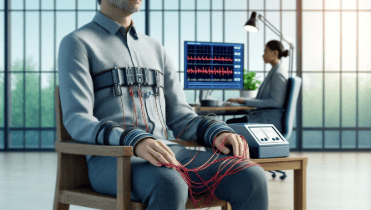
Sit someone in a chair, strap sensors to their chest, fingers, and arm, then ask a few carefully crafted questions. The machine draws lines on paper—or a screen now—and somehow we’re supposed to tell truth from lies. It sounds a bit like science fiction from the 1950s. Yet the polygraph test is still very real, still used, and still argued over.
If you’ve ever wondered whether it actually works, you’re not alone. People tend to fall into two camps: those who think it’s a near-mind-reading device, and those who think it’s complete nonsense. The truth sits somewhere in between, and it’s more interesting than either extreme.
What a Polygraph Actually Measures
Here’s the thing: a polygraph doesn’t detect lies. Not directly, anyway.
What it measures are physical responses—heart rate, breathing patterns, blood pressure, and skin conductivity (basically, how sweaty your fingers get). The idea is simple enough. When people lie, they often feel stress or anxiety. That stress shows up in the body.
So instead of catching lies, the polygraph catches reactions.
Picture this: you’re asked a neutral question like “Is your name Alex?” Your body stays relatively calm. Then you’re asked, “Did you take the missing money?” If you’re hiding something—or even just worried about the question—you might tense up. Your breathing shifts. Your pulse ticks upward. The machine records all of it.
But here’s where things get messy.
Not all stress equals lying. And not all lying causes stress.
The Human Factor Changes Everything
Let’s say someone is naturally anxious. Job interview nerves. Fear of authority. General tendency to overthink. That person could show strong reactions even when telling the truth.
Now flip it. Imagine someone who’s calm under pressure, or emotionally detached. Maybe they’ve rehearsed their answers. Maybe they just don’t feel much anxiety about lying. Their readings might stay flat even if they’re being deceptive.
That’s why two people can give the same false answer and produce completely different polygraph results.
I once heard about a guy who failed a polygraph simply because he was terrified of failing it. He hadn’t done anything wrong. But the fear of being misunderstood created the exact physiological spikes the test looks for. It’s a bit of a paradox.
The machine isn’t broken—it’s just interpreting signals that don’t have a one-to-one meaning.
How the Test Is Structured
Polygraph exams aren’t just random questions thrown at you. There’s a method behind them, and it’s more psychological than most people expect.
Typically, the examiner starts with a pre-test interview. This part can feel casual, but it’s crucial. They’re building a baseline and also shaping how you perceive the questions. Sometimes they’ll go over every question in advance.
Then comes the actual test. Questions usually fall into a few categories:
Relevant questions tied to the issue at hand
Control questions designed to provoke mild concern
Neutral questions with obvious answers
The comparison between these responses is what matters.
For example, a control question might be something like, “Have you ever lied to get out of trouble?” Almost everyone has. So most people will feel a slight internal reaction, even if they answer “no” or minimize it.
The theory is that innocent people will react more strongly to these broad, uncomfortable questions, while guilty people will react more strongly to the specific accusation.
It’s clever. But also fragile.
Why Polygraphs Are Still Used
Given all the uncertainty, you might expect polygraphs to be obsolete by now. They’re not.
Law enforcement agencies still use them in investigations. Some government positions require them during hiring. In certain situations, they’re even used in monitoring offenders.
Why?
Partly because of psychology. The test itself can encourage people to confess. Sitting in that chair, wired up, can make someone feel like the truth is about to be exposed no matter what. That pressure alone leads some people to admit things they might otherwise deny.
There’s also the belief—right or wrong—that the test provides useful clues when combined with other evidence.
It’s less about the machine delivering a final verdict and more about guiding the conversation.
See also: A Life Half Full: Aging With Optimism
The Accuracy Question
This is where debates get heated.
Supporters claim polygraphs can be quite accurate when conducted by skilled examiners. Critics argue the results are unreliable and too dependent on interpretation.
Most serious discussions land somewhere in the middle: polygraphs are neither useless nor definitive.
Studies have produced mixed results. Some suggest accuracy rates around 70–90% under controlled conditions. But real-life situations are rarely controlled. Emotions, misunderstandings, and external pressures all come into play.
And then there’s examiner bias. Two different examiners might interpret the same data differently. That alone introduces a layer of subjectivity that’s hard to ignore.
Courts in many countries are skeptical for this reason. Polygraph results are often inadmissible or heavily restricted in legal proceedings.
Can You Beat a Polygraph?
This question comes up a lot, usually in a half-joking tone. But people do try.
Some attempt physical tricks—controlling breathing, biting their tongue, pressing their toes into the floor—to manipulate their physiological responses. Others focus on mental strategies, like staying calm during relevant questions and artificially stressing themselves during control questions.
Do these methods work?
Sometimes. But not reliably.
Experienced examiners are trained to watch for signs of countermeasures. And trying too hard to “game” the test can create unusual patterns that raise suspicion.
That said, the very fact that people can potentially influence the results highlights a core issue: the test depends heavily on interpretation.
It’s not like a fingerprint match. It’s closer to reading body language—just with more data points.
Real-Life Situations Where Polygraphs Show Up
You’re unlikely to encounter a polygraph in everyday life, but when you do, it tends to matter.
Job screenings for certain federal or security roles are a common example. Candidates may be asked about past behavior, drug use, or undisclosed activities. Even small admissions can become significant in that context.
Then there are criminal investigations. A suspect might agree to a polygraph to demonstrate innocence. Sometimes it helps their case. Other times, it complicates things.
There are also more unusual scenarios. Couples occasionally turn to polygraph tests in cases of suspected infidelity. It sounds dramatic—and it is. But it happens.
In those personal situations, the result often matters less than the act itself. Taking the test can signal willingness to be transparent, regardless of the outcome.
The Emotional Experience of Taking One
People often underestimate how intense the experience can feel.
You’re sitting still, hooked up to sensors, aware that every twitch might be recorded. Even if you’ve done nothing wrong, your mind starts racing. “What if I react the wrong way?” “What if they misread something?”
That internal loop can create exactly the kind of physiological response the test is looking for.
It’s a strange setup. You’re being asked to stay calm while knowing that your calmness—or lack of it—is under scrutiny.
Some people walk out convinced the process was fair. Others feel it was deeply uncomfortable or even misleading.
Both reactions can be valid, depending on how the test was conducted.
So, Should You Trust a Polygraph?
If you’re looking for a simple yes or no, you won’t get one.
A polygraph can provide insight. It can highlight inconsistencies. It can even push someone toward telling the truth. But it’s not a definitive lie detector.
Treat it as one piece of a larger puzzle.
If someone claims the machine is infallible, that’s a red flag. If someone dismisses it entirely, that might be an oversimplification too.
The real value lies in context—how the test is conducted, who interprets it, and what other evidence exists alongside it.
The Bigger Picture
There’s something fascinating about our desire to measure truth. The polygraph is just one attempt, and arguably a flawed one, but it reflects a deeper human instinct.
We want certainty. We want clear answers.
But human behavior doesn’t always cooperate. Emotions are messy. Stress doesn’t follow neat rules. And honesty isn’t always easy to quantify.
That’s why the polygraph continues to sit in this gray area—part science, part psychology, part theater.
And maybe that’s the most honest thing about it.
Final Thoughts
The polygraph test isn’t magic, and it isn’t meaningless either. It’s a tool shaped as much by human interpretation as by data.
If you ever find yourself facing one, the most useful thing to understand is this: it’s not reading your mind. It’s reading your body—and your body doesn’t always tell a clear story.
That alone should make anyone cautious about treating the results as absolute truth.